Industrial & SMB robotShipping
AIST / PARO Robots PARO
The only robot pet with a real clinical evidence base — and the one whose famous 'FDA-cleared' credential turns out not to exist.
We haven't tested this machine hands-on, so this profile carries no rating — every fact below traces to the sources at the end, and the judgments are clearly ours. Full methodology on the Robot Tracker.
At a glance
- Status
- ShippingReal units delivered to paying customers
- Can you buy it?
- Yes
- Price
- ~£6,000 ex. VAT via the UK distributor; the US distributor publishes no price (quote-on-request). Institutional, not consumer, pricing.
- Form factor
- Animatronic baby harp seal
- AI brain
- No LLM. Five sensor types (tactile, light, audio, temperature, posture) + behaviour reinforcement — it learns its name and repeats what it gets stroked for.
- Maker
- AIST / PARO Robots (Japan (US distributor: Itasca, IL))
- Backing
- Public research institute (AIST) origin; sold through regional distributors, not VC-backed.
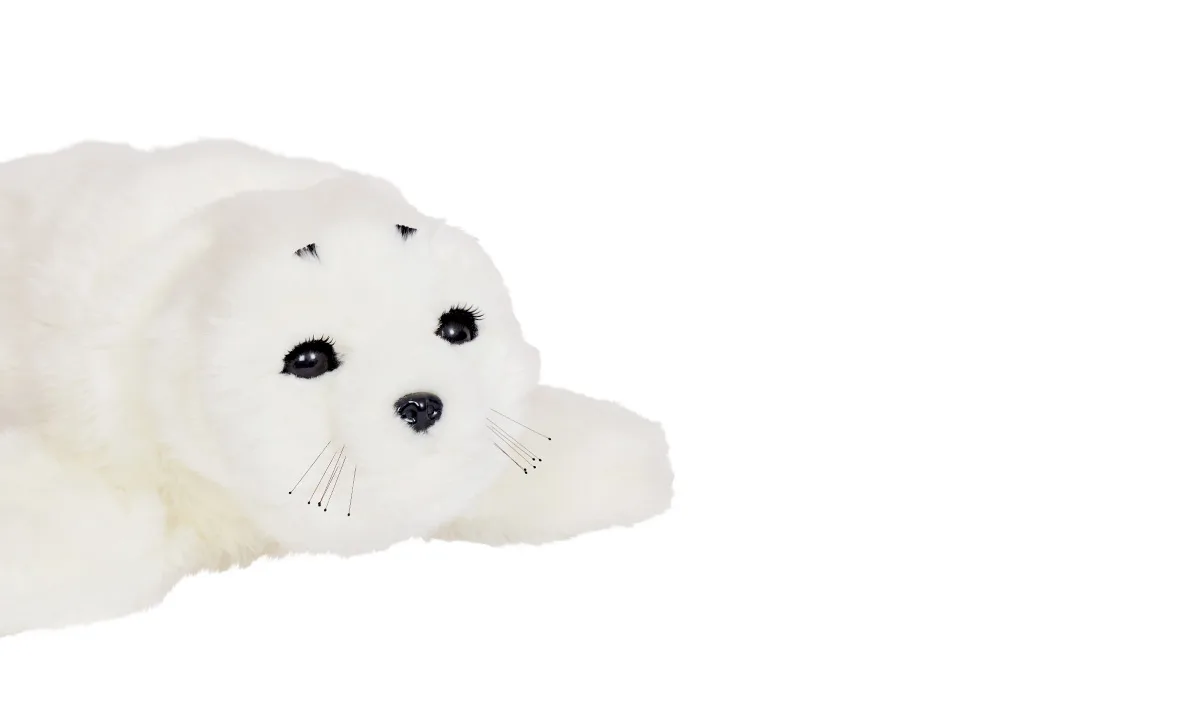
PARO is a 2.5kg animatronic baby harp seal, invented by Dr Takanori Shibata at Japan's AIST, in commercial use since 2004 and now in its eighth generation. It has no wheels, no screen and no chatbot. It moves its head and flippers, makes baby-seal sounds, and reinforces behaviours you stroke it for. It is deliberately a seal rather than a dog or cat, so that users have no real-world animal to judge it against.
It is the outlier in this category: while every other robot pet rests on maker marketing, PARO has twenty-plus years of care-home deployment and a genuine body of peer-reviewed research behind it, including registered trials on dementia and delirium agitation.
PARO in pictures



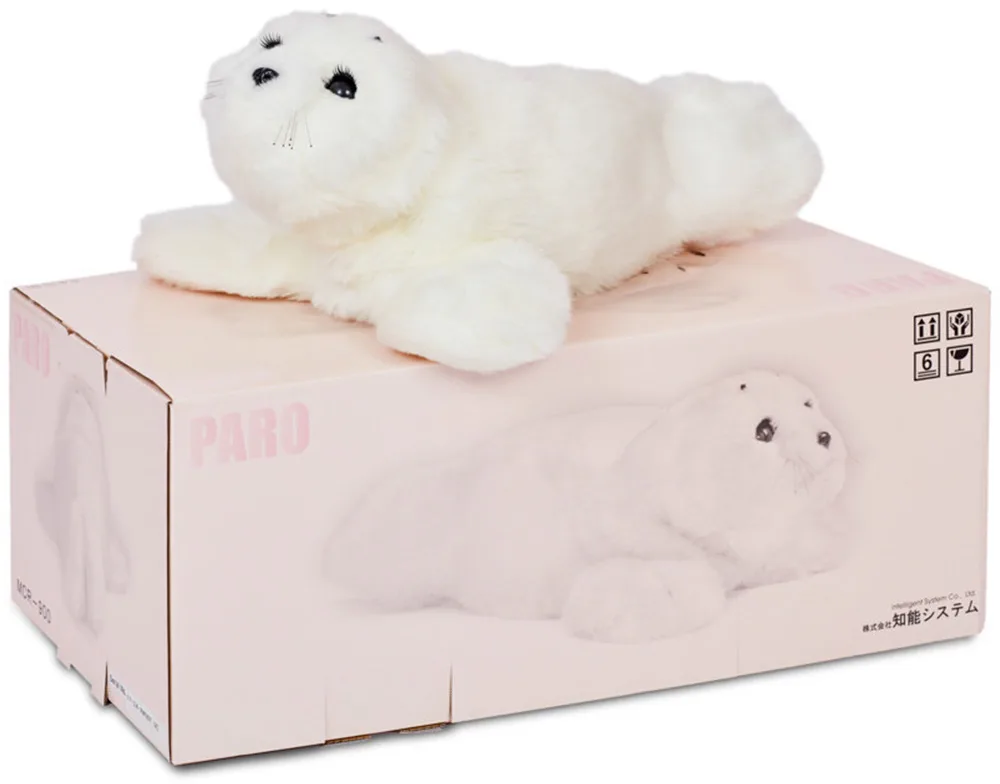
Images are the manufacturers' own press and product photography, shown here for identification and review, and credited to the rights holder.
What's real
- • The only robot pet here with a real, independent clinical evidence base — including registered RCTs on agitation in dementia care.
- • Twenty-plus years of field use in care facilities across Japan and Europe; roughly 5,000 units in service worldwide (a figure that is itself now dated).
- • Deliberately designed as an unfamiliar animal, so users don't measure it against a real dog or cat.
- • Holds a Guinness World Record as the world's most therapeutic robot.
Know before you watch (or buy)
- • 🚨 The 'FDA-cleared Class II medical device' claim that appears in nearly every article about PARO is WRONG. FDA's own databases show PARO's US distributor is REGISTERED and its device LISTED under product code HCC (biofeedback, 21 CFR 882.5050, Class II) — with no 510(k) on file. That regulation is explicitly EXEMPT from 510(k) premarket review. So the FDA never 'cleared' PARO and never evaluated whether it works. Registration is a self-declared listing, not an approval. Anyone can verify this via api.fda.gov.
- • The claim that PARO is 'covered by Medicare, Medicaid and private insurance' traces to the inventor's own papers, not to any published CMS coverage decision. We could not find one. Treat it as unsupported.
- • ~£6,000 (and likely $5–6k+ in the US) for a device with no consumer support path and a design whose roots are in the 1990s — no app, no updates, no connectivity.
- • The serious ethical objection is worth taking seriously: Sherry Turkle's argument that PARO offers 'an illusion of a relationship', and the broader case against outsourcing human emotional care to a machine.
The evidence
In care facilities since 2003; ~5,000 units in service globally (~3,000 in Japan) per press reporting, though that figure is now several years old. Multiple registered clinical trials.
Sources: PARO Robots / AIST · openFDA (FDA device registration + 510(k) databases) · eCFR / FDA · Sense Medical (PARO UK) · ClinicalTrials.gov
What changed on PARO's own pages
Nothing yet. We re-crawl the maker's own price and product pages and record anything that moves — a price, a ship date, a caveat appearing or disappearing. We've been watching since 2026-07-12and this maker hasn't changed those pages since.
We report what changed and when, with the page it changed on. We don't speculate about why.
Bottom line
The most substantiated robot pet on earth — and still not what the internet says it is. If you run a memory-care setting and want the option with actual peer-reviewed evidence, PARO is the answer, at institutional prices. But buy it for the research, not for the FDA credential, because that credential does not exist: PARO is FDA-registered under a rule that is exempt from FDA review. We think being straight about that is more useful than repeating the press release.
FAQ
Is PARO an FDA-approved medical device?
No — and this is the most repeated error about it. PARO's US distributor holds an active FDA establishment registration (3009118691) and its device is listed under product code HCC: biofeedback device, 21 CFR 882.5050, Class II. But there is NO 510(k) on file, because that regulation is explicitly exempt from 510(k) premarket notification. FDA has therefore never cleared, approved, or evaluated PARO's therapeutic effectiveness. 'FDA-registered' means the company told the FDA it exists. It is not an endorsement. You can verify this yourself against api.fda.gov.
Does PARO actually work?
There is real evidence — which is more than any other robot pet can say. PARO has been studied in peer-reviewed research and registered clinical trials, particularly around agitation in dementia care, and has been used in care facilities for over twenty years. But 'has an evidence base' is not the same as 'FDA-approved', and results across studies are mixed. The honest position: it's the best-supported option in a category where almost nothing is supported at all.
How much does PARO cost?
The UK distributor lists it at about £6,000 excluding VAT. The US distributor publishes no price at all — it's quote-on-request, aimed at care facilities rather than individuals. Be sceptical of the specific US dollar figures circulating online; the ones we traced came from an AI-generated content farm, not from the distributor.