Robot head-to-head · No ratings, just evidence
Boston Dynamics Atlas vs Tesla Optimus (2026)
The legacy champion against the scale insurgent. Boston Dynamics has been the face of humanoid robotics for a decade of viral demos; Tesla claims it will out-manufacture everyone. In 2026 both finally have production stories — very different ones.
Our verdict
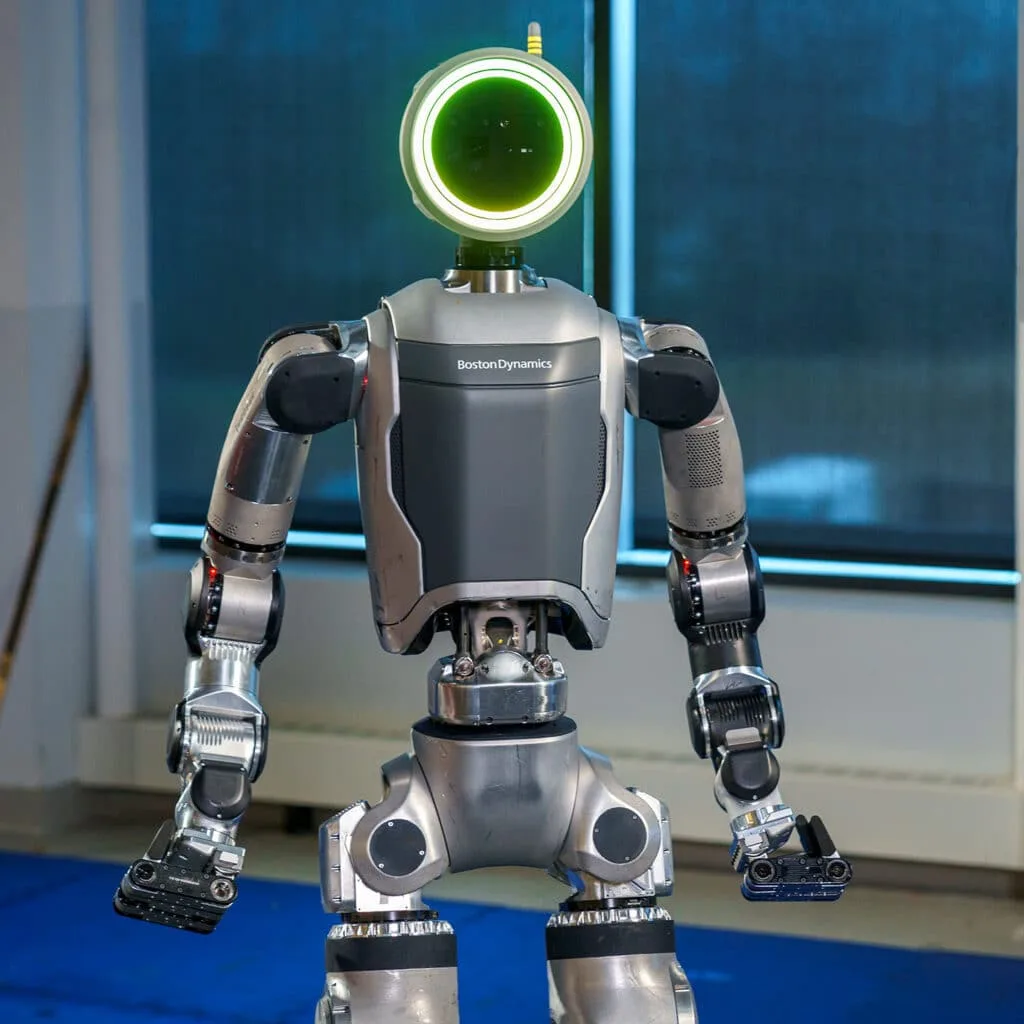
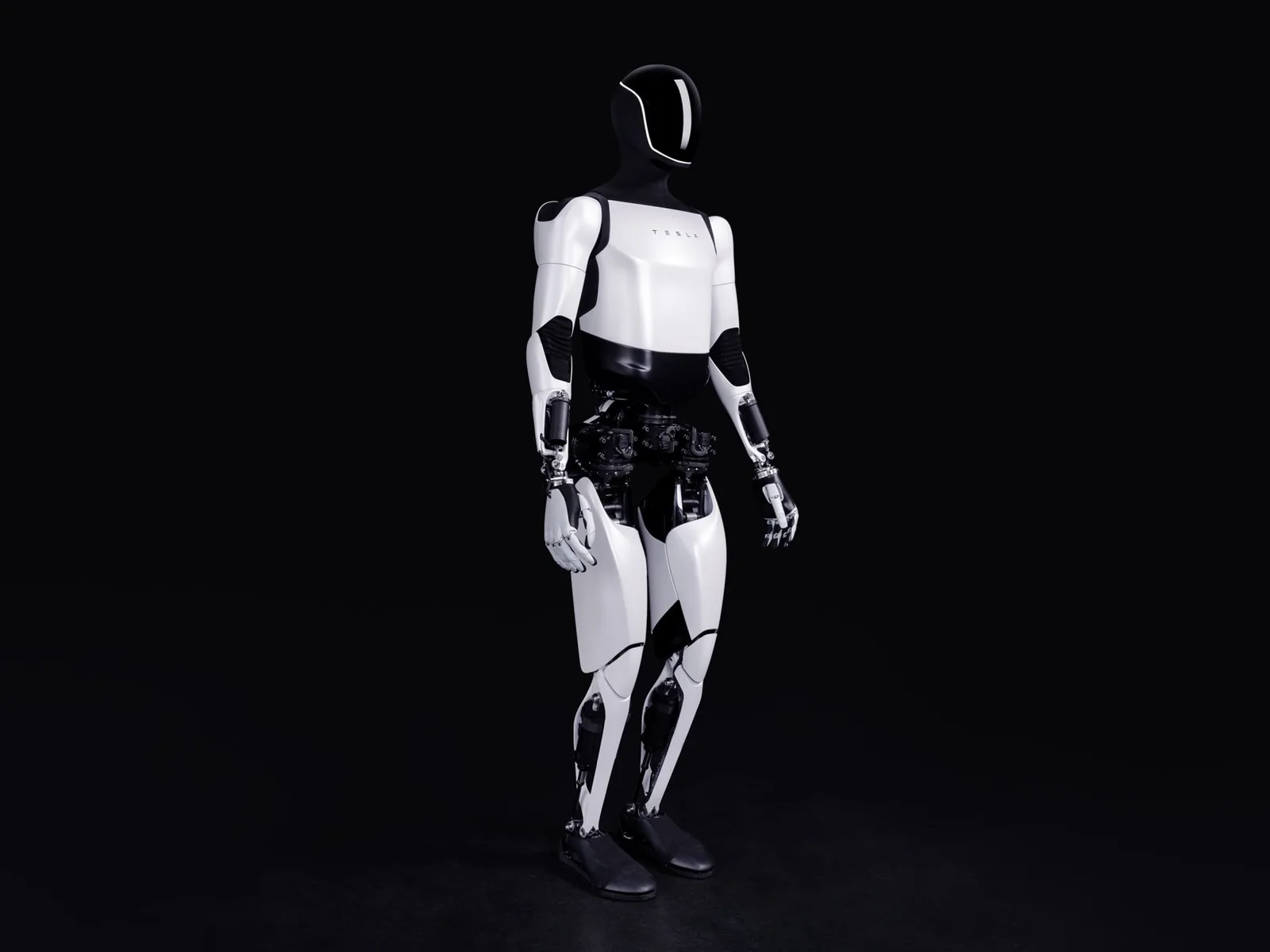
Atlas is closer to real industrial deployment: the production version was unveiled at CES 2026, manufacturing has begun, all 2026 fleets are committed (Hyundai's robotics center and Google DeepMind), and parent Hyundai has earmarked more than 25,000 units for its own plants with a 30,000-a-year US factory planned by 2028. Optimus counters with a cheaper price target ($20–30k vs Atlas's estimated $130–140k early cost) and bigger volume ambitions, but with zero robots verifiably working as of early 2026. Pick Atlas as the likelier industrial workhorse; pick Optimus only as a long-dated bet on Tesla's manufacturing machine. Neither is available to you either way — Atlas until ~2027 for external customers, Optimus indefinitely.
Side by side
| Boston Dynamics Atlas (electric) | Tesla Optimus | |
|---|---|---|
| Status | Pilot only | Announced |
| Can you buy it? | No | No |
| Price | Not for sale externally until ~2027; early unit cost est. $130–140k | Not for sale; Tesla has projected $20–30k when commercial sales open (~late 2027) |
| Form factor | Bipedal humanoid | Bipedal humanoid |
| AI brain | In-house + Google DeepMind foundation models | In-house (vision-first, FSD-derived) |
| Real-world evidence | Production version unveiled at CES 2026 with all 2026 fleets already committed (Hyundai's robotics center + Google DeepMind); Hyundai plans 25,000+ Atlas units in its own plants and a 30k/yr robot factory by 2028. | Fremont production line (converted from Model S/X) targeted a late-July/August 2026 start with no volume commitment; Musk conceded in Jan 2026 that zero Optimus robots were doing useful work. |
| Backing | Hyundai-owned (acquired 2021); part of Hyundai's $26bn US investment plan | Part of Tesla; Fremont line targets 1M units/yr capacity long-term |
| Sources | Boston Dynamics · The Korea Herald | Electrek · Teslarati · Embodied Global |
Status definitions: Shipping = real units delivered to paying customers; Pre-order = you can pay today; delivery comes later; Pilot only = working in partner facilities — you can't buy one; Announced = demos and plans; no deliveries yet; Shelved = promised, then indefinitely postponed or cancelled. We assign status from evidence, not press releases — methodology on the Robot Tracker.
Committed demand
Atlas has the biggest committed order anywhere: 25,000+ units for Hyundai and Kia plants, starting with the Georgia Metaplant around 2028 — a captive but genuinely funded pipeline, with Hyundai Mobis building actuators domestically. Optimus's demand is Tesla's own stated intent; no unit commitments have been published.
Cost reality
Atlas's early production cost is estimated at $130–140k, falling toward $30k only past 50,000 cumulative units. Tesla targets $20–30k from much earlier — historically the kind of Tesla target that arrives late, if at all. On today's real costs, both are industrial-equipment money.
Brains
Atlas pairs the field's best mechanical engineering with Google DeepMind foundation models — a notable 2026 alliance. Optimus leans on Tesla's vision-first, FSD-derived stack and its fleet-learning infrastructure. Both are credible; neither has public, independently verified autonomy benchmarks.
Track record of shipping
Boston Dynamics has shipped real products before (Spot, Stretch) into commercial fleets. Tesla has shipped cars at scale but never a robot. For 'will v1 actually arrive,' pedigree favors Boston Dynamics; for 'how cheap can v3 get,' scale favors Tesla.
FAQ
Is Atlas or Optimus more advanced?
Mechanically, Atlas — decades of legged-robot engineering, now in a production electric version with Google DeepMind models being integrated. Commercially, Atlas also leads: manufacturing has started and 25,000+ units are committed by Hyundai. Optimus's edge is prospective: a far lower price target and automotive-scale manufacturing, neither yet demonstrated on a shipping robot.